An Educational Guide to Commercial Roof Moisture Evaluation for Property Owners in the Piedmont Triad
If your commercial roof is leaking, showing signs of age, or being considered for restoration, one of the most important questions is:
Is there moisture trapped beneath the roofing system?
The answer can determine whether your roof can be successfully restored or whether replacement is the better long-term investment.
Because moisture is often hidden beneath the roof membrane, experienced commercial roofing contractors rely on moisture surveys to evaluate the condition of the roofing system before making recommendations. A moisture survey provides valuable information that cannot be determined by visual inspection alone.
What Is a Commercial Roof Moisture Survey?
A commercial roof moisture survey is a non-destructive evaluation used to identify areas of trapped moisture within a roofing system.
Over time, water can enter through punctures, flashing failures, open seams, deteriorated penetrations, or storm damage. While the roof surface may appear sound, moisture can become trapped within the insulation or roofing assembly.
Because trapped moisture is not always visible, specialized testing helps determine the roof's overall condition before major repair, restoration, or replacement decisions are made.
Why Is Moisture Detection So Important?
A roof restoration system is designed to protect an existing roofing system—not conceal underlying problems.
If insulation has become saturated or portions of the roof have deteriorated beyond repair, simply installing a coating over the surface may not address the source of the problem.
Identifying moisture before work begins allows roofing professionals to recommend the most appropriate solution based on the actual condition of the roof rather than assumptions.
Common Methods Used to Detect Moisture
Commercial roofing professionals may use one or more methods depending on the roof type, building conditions, and project requirements.
Electronic Moisture Scanners
Electronic moisture scanners measure differences in moisture levels beneath the roofing membrane without damaging the roof. These devices can quickly identify areas that may require further evaluation.
Infrared Roof Surveys
Infrared thermography is commonly performed after sunset when temperature differences between wet and dry insulation become visible through specialized thermal imaging equipment.
This method allows large commercial roofs to be evaluated efficiently and helps identify potential moisture intrusion that may not be visible during a standard inspection.
Core Samples
When necessary, roofing professionals may remove small core samples to verify roofing materials, insulation condition, and moisture levels within the roofing assembly.
Core sampling provides direct confirmation of conditions identified during moisture testing.
How Moisture Survey Results Influence Roofing Decisions
Every commercial roof is different.
Moisture survey results help determine whether:
- The existing roofing system remains structurally sound.
- Wet insulation is limited to isolated areas.
- Repairs can be performed before restoration.
- A roof restoration system is a practical option.
- Roof replacement offers the better long-term value.
Rather than relying solely on the roof's age, these findings allow recommendations to be based on the roof's actual condition.
Can a Roof Still Be Restored If Moisture Is Found?
Sometimes, yes.
Finding moisture does not automatically mean a roof requires complete replacement.
If moisture is isolated to specific sections, those areas may be repaired or replaced while the remaining roofing system continues to qualify for restoration.
However, if moisture is widespread or the roofing system has suffered significant deterioration, replacement may provide the most reliable long-term solution.
The extent of the moisture—not simply its presence—is what matters.
How B&D Roofing Solutions Evaluates Commercial Roof Moisture
No two commercial roofs are exactly alike, which is why every evaluation begins with a thorough inspection of the existing roofing system.
With more than 35 years of commercial roofing experience, Bill Frey begins every evaluation by examining the areas where moisture intrusion most commonly occurs, including roof penetrations, HVAC curbs, flashing details, seams, drains, and other vulnerable areas. Experience often reveals where hidden problems are most likely to exist before testing even begins.
For most roofing systems, we use a Tramex® moisture meter to identify areas that may contain trapped moisture without causing damage to the roof. This allows us to evaluate large sections of the roof quickly and efficiently.
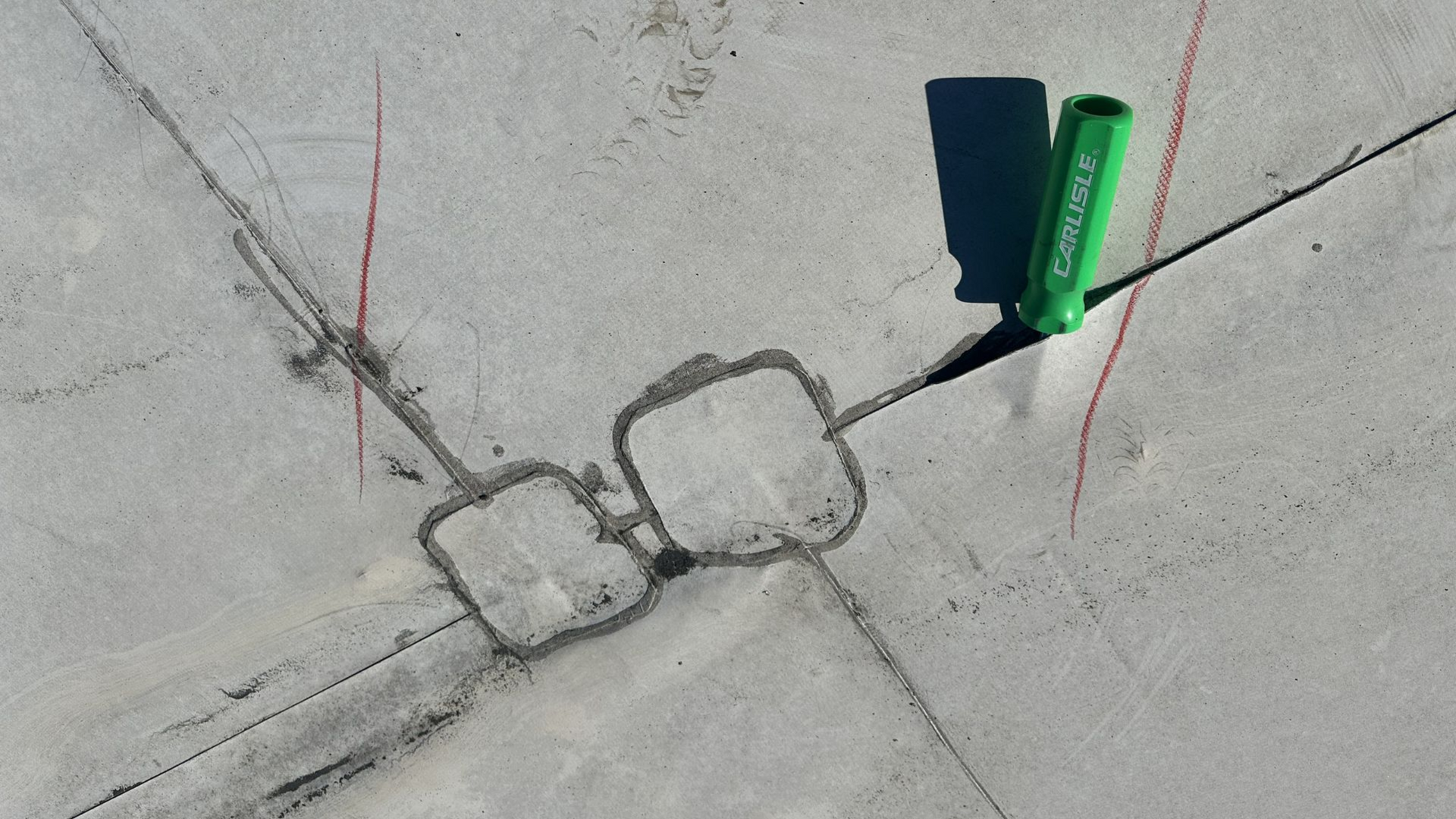
Some roofing membranes are not compatible with electronic moisture scanning. In those cases, or when additional verification is needed, we perform carefully selected core samples.
Core samples serve two important purposes:
- They confirm whether moisture is present within the roofing system.
- They reveal the existing roof assembly, including insulation thickness and whether multiple roofing systems have been installed over time.
That information is essential when preparing an accurate proposal and determining whether restoration, repairs, or replacement is the most appropriate solution.
Experience Still Matters
Technology is an important part of evaluating today's commercial roofing systems, but it doesn't replace experience.
Moisture meters and core samples provide valuable information. Knowing where to test is just as important as the results themselves.
Every commercial roof tells a story. The condition of the membrane, flashing details, penetrations, curbs, and drainage patterns often reveal patterns that help guide a thorough evaluation. Experience allows those observations to be combined with moisture testing to provide recommendations based on the roof's actual condition—not assumptions.
The B&D Promise
We believe commercial property owners deserve honest recommendations—not sales pressure.
Every roofing system is different, and every building has unique needs. Our job is to evaluate the condition of your roof, explain your options clearly, and recommend the solution that provides the best long-term value.
Whether that's a restoration, a repair, or a complete replacement, we'll explain the reasons behind our recommendation and tell you what we would recommend if it were our own building.